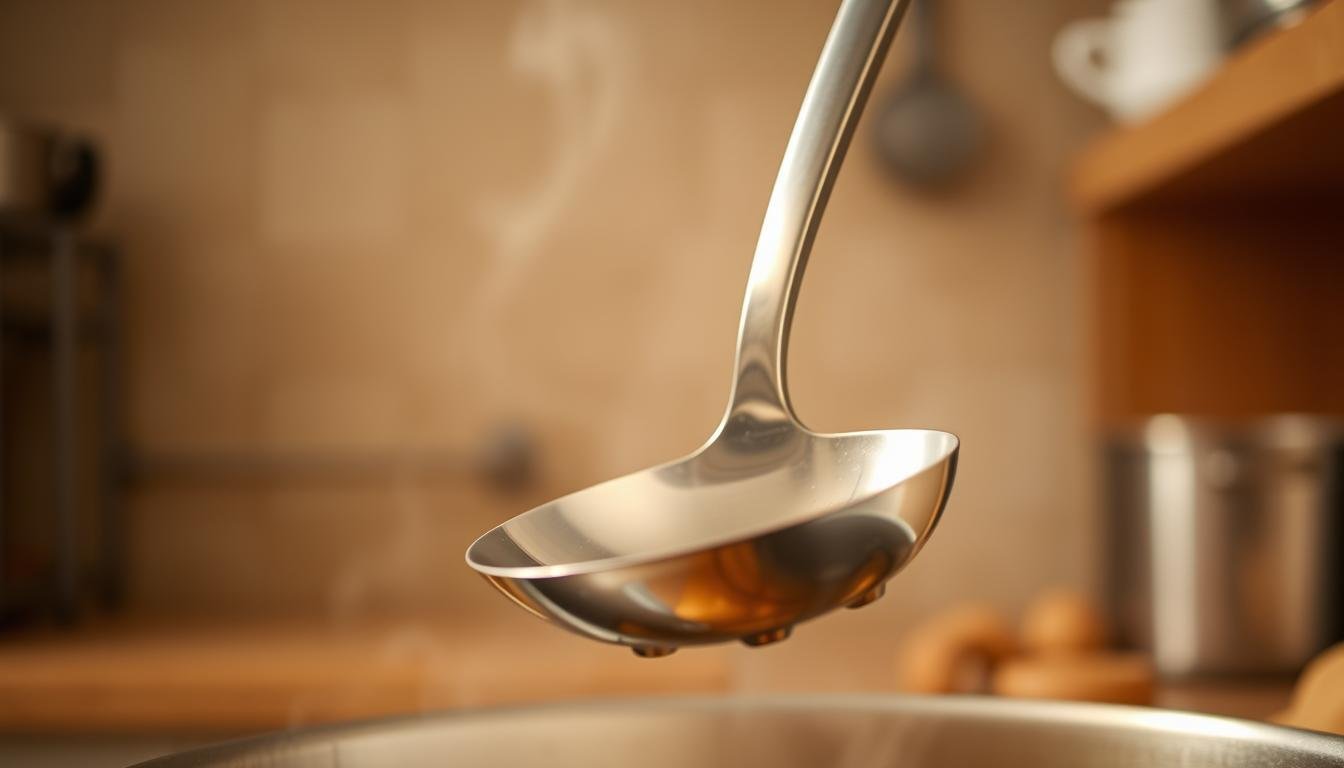
Best Kitchen Ladle options transform how you serve soups, stews, and sauces in your home kitchen. The right ladle eliminates drips, ensures consistent portions, and makes serving meals effortless.
Most home cooks grab whatever ladle is available without considering how design affects performance. This guide helps you choose a ladle that matches your cooking style and serving needs.
You will learn which materials work best for different tasks, what handle designs offer the most comfort, and which features make the biggest difference in daily use.
TL;DR
- Stainless steel ladles offer the best combination of durability and heat resistance for most home kitchens.
- Handle length should match your deepest pot – aim for at least 12 inches to keep hands safe from heat.
- Bowl capacity between 4-6 ounces works for most serving tasks without being too heavy when full.
- One-piece construction eliminates weak points where handles can break or bacteria can hide.
* As an Amazon Associate I earn from qualifying purchases at no extra cost to you.
Best Kitchen Ladle Types Compared
Kitchen ladles fall into three main categories, each designed for specific serving tasks. Understanding these differences helps you choose the right tool for your cooking style.
Standard Soup Ladles
Soup ladles feature deep bowls that hold 4-6 ounces of liquid. The curved bowl shape prevents spillage while the long handle keeps your hands away from hot surfaces.
These ladles work best for serving broths, chunky soups, and stews. The deep bowl captures solids along with liquid for balanced portions.
Features of Quality Soup Ladles
- Deep bowl design – holds more liquid and prevents splashing
- Long handle – typically 12-14 inches for safe reach into deep pots
- Pour spout – some models include a small spout for precise pouring
Serving Ladles
Serving ladles have shallower, wider bowls perfect for transferring food from serving dishes to plates. They work well for pasta salads, casseroles, and other solid foods mixed with sauce.
The flatter bowl design makes it easier to scoop food from shallow serving dishes. These ladles often have shorter handles since you are not reaching into deep pots.
Specialty Ladles
Specialty ladles include sauce ladles, portion control ladles, and slotted versions for draining. Sauce ladles have smaller bowls and precise pour spouts for controlled dispensing.
Portion control ladles come in specific sizes like 2-ounce or 8-ounce capacities. Slotted ladles let you drain excess liquid while transferring food.
Materials and Construction
Ladle materials affect durability, heat resistance, and maintenance requirements. Each material offers distinct advantages for different cooking situations.
Stainless Steel
Stainless steel ladles provide excellent durability and heat resistance. They do not absorb odors or stains and can handle temperatures up to 500°F without damage.
The non-reactive surface works with acidic foods like tomato sauce without affecting taste. Most stainless steel ladles are dishwasher safe and resist corrosion.

Stainless Steel Advantages
- Heat resistance – safe for use with boiling liquids
- Durability – resists dents, scratches, and corrosion
- Easy cleaning – dishwasher safe with no special care needed
- Professional appearance – matches commercial kitchen aesthetics
Silicone and Plastic
Silicone ladles offer flexibility and heat resistance up to 400°F. They protect non-stick cookware surfaces and come in various colors to match kitchen decor.
Plastic ladles cost less but have lower heat tolerance, usually around 200°F. Both materials are lightweight and comfortable for extended use.
Considerations for Silicone and Plastic
- Non-stick safe – will not scratch coated surfaces
- Lightweight – reduces hand fatigue during long serving sessions
- Stain prone – may absorb colors from tomato-based sauces
- Limited heat resistance – plastic options may warp near high heat
Wood and Traditional Materials
Wooden ladles provide natural beauty and gentle treatment of cookware surfaces. They do not conduct heat, making handles comfortable even with hot foods.
Wood requires more maintenance than other materials, including regular oiling to prevent cracking. Hand washing is recommended to preserve the finish.
Key Features to Consider
Several design elements affect how well a ladle performs in daily use. These features impact comfort, efficiency, and longevity.
Handle Design
Handle length should match your deepest cooking pot with extra length for safety. Aim for at least 12 inches for standard home cooking, more if you use large stock pots.
Ergonomic handles reduce hand strain during extended serving. Look for handles with slight curves or textured grips that fit comfortably in your hand.

Bowl Capacity and Shape
Bowl capacity affects portion size and ease of use. A 4-6 ounce capacity works well for most serving tasks without becoming too heavy when full.
Deep, round bowls work best for liquids while shallow, wider bowls suit thicker foods. Some ladles feature measurement markings for consistent portioning.
Choosing the Right Bowl Size
Match your ladle size to your most common serving tasks for best results.
- 2-3 oz capacity for sauces and gravies
- 4-6 oz capacity for soups and general serving
- 8+ oz capacity for large batch cooking and buffet service
- Consider having multiple sizes for different tasks
Construction Quality
One-piece construction eliminates weak joints where handles attach to bowls. This design also reduces places where food particles can hide and bacteria can grow.
Welded joints should be smooth and free of gaps. Riveted connections should sit flush with the surface and show no signs of loosening.
Maintenance and Care
Proper care extends ladle life and maintains food safety. Different materials require specific maintenance approaches.
Daily Cleaning
Wash ladles immediately after use to prevent food from drying and sticking. Hot soapy water removes most residue effectively.
For stubborn stains on stainless steel, soak in hot water before scrubbing. Avoid abrasive cleaners that can scratch the surface.

Storage Solutions
Hang ladles on hooks or store them in utensil crocks to allow air circulation. Avoid storing them in crowded drawers where they can get scratched or damaged.
Keep wooden ladles away from heat sources and direct sunlight to prevent cracking. Store them in dry locations to prevent warping.
Common Ladle Problems and Solutions
Understanding common ladle issues helps you choose better tools and maintain them properly. Most problems stem from using the wrong ladle for specific tasks.
Dripping and Spillage
Dripping occurs when ladles lack proper pour spouts or have too-shallow bowls. Choose ladles with defined rims that create clean pour points.
Practice your pouring technique by tilting the ladle gradually rather than dumping contents quickly. This gives you better control over flow rate.
Handle Heat Transfer
Metal handles can become uncomfortably hot when left in cooking pots. Remove ladles from heat sources between uses or choose models with heat-resistant handles.
Silicone or wooden handles stay cooler than metal but may have lower overall heat resistance. Consider your cooking style when choosing handle materials.
For more kitchen tool guidance, check out our comparison of colanders versus sieves for proper draining techniques. You might also find our guide to rubber versus silicone spatulas helpful when building your kitchen utensil collection.
Professional kitchens often use multiple ladle sizes for different tasks, as noted by Serious Eats in their equipment guides.
Frequently Asked Questions
What size ladle works best for serving soup?
A 4-6 ounce capacity ladle provides ideal serving portions for most soups without being too heavy when full.
Can I put my stainless steel ladle in the dishwasher?
Yes, most stainless steel ladles are dishwasher safe and can handle the high temperatures and detergents used in automatic washing.
How long should a ladle handle be?
Choose a handle that is at least 2 inches longer than your deepest pot, typically 12-14 inches for standard home cooking needs.
What is the difference between a soup ladle and a serving ladle?
Soup ladles have deeper bowls designed for liquids while serving ladles have shallower, wider bowls better suited for transferring solid foods.
Do wooden ladles require special care?
Wooden ladles need hand washing and occasional oiling to prevent cracking, unlike metal or plastic options that can go in the dishwasher.
Final Thoughts
Best Kitchen Ladle selection depends on your cooking habits and the foods you serve most often. A quality stainless steel ladle with proper capacity handles most home cooking tasks effectively.
Invest in one high-quality ladle that matches your primary serving needs, then add specialty options as your cooking evolves. The right ladle makes serving meals safer and more enjoyable for everyone at your table.

Ryan Conlon is the comfort food fan behind QuickSimpleSoups.com, where he shares easy soup ideas, smart shortcuts, and helpful tips for busy home cooks. Ryan believes a good bowl of soup doesn’t need to be complicated—and he’s here to prove it. Whether you’re looking for quick weeknight meals or cozy classics with a twist, Ryan’s simple approach helps you serve up satisfying soups with minimal effort.