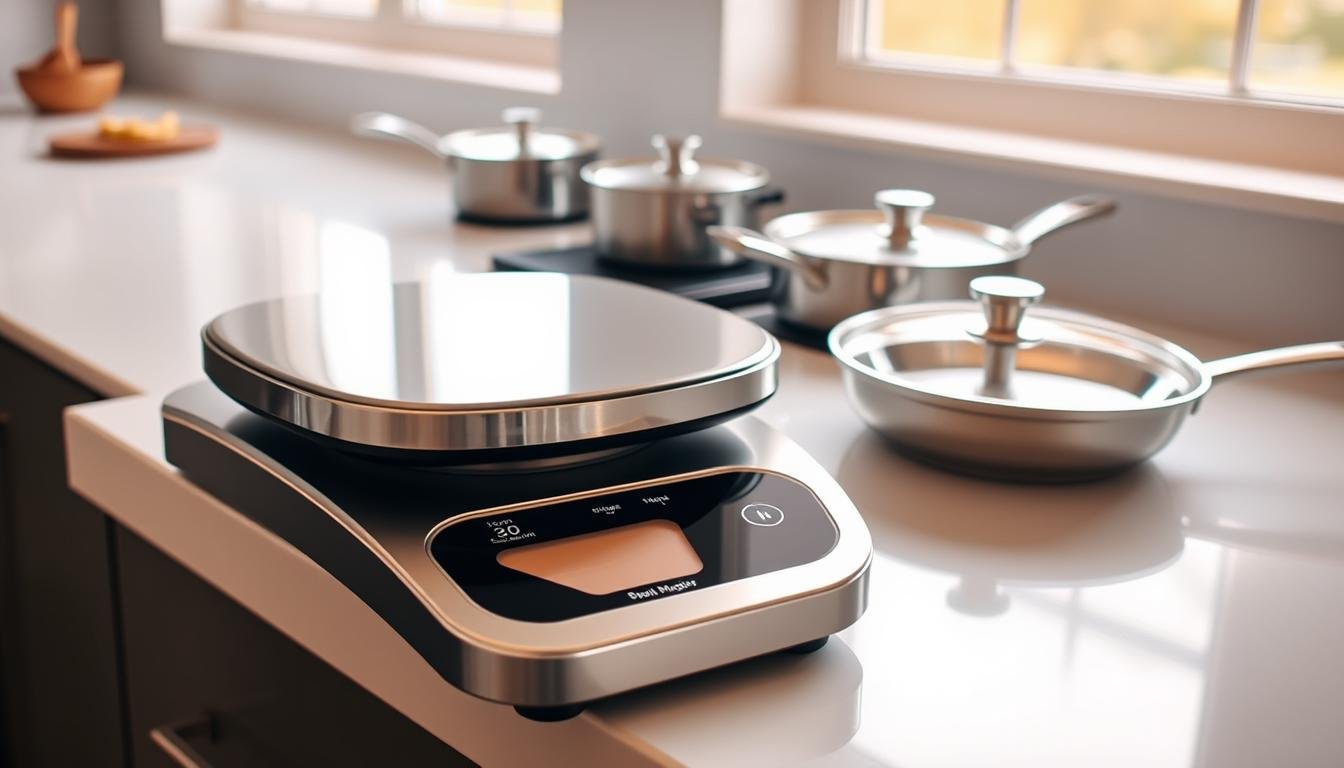
Digital Kitchen Scale accuracy transforms how you cook and bake at home. Measuring by weight eliminates guesswork and delivers consistent results every time.
Most cooking failures happen because of measurement errors. A digital scale fixes this problem instantly.
You will discover why professional chefs rely on weight measurements and how to pick the right scale for your kitchen needs.
TL;DR
- Weight measurements are 10 times more accurate than volume measurements for baking ingredients.
- One cup of flour can weigh anywhere from 120 to 150 grams depending on how you scoop it.
- Digital scales typically cost $15-50 and pay for themselves by preventing recipe failures.
- Professional bakeries use weight measurements exclusively because they produce identical results every batch.
Digital Kitchen Scale Benefits for Home Cooks
A digital kitchen scale measures ingredients by weight instead of volume. This method works better because weight stays constant regardless of how you pack or pour ingredients.
Volume measurements like cups and tablespoons change based on technique. Weight measurements never change.
Why Volume Measurements Fail
Measuring cups give different results every time you use them. How you scoop flour affects the final weight by up to 30%.
Different ingredients have varying densities that make cup measurements unreliable. Brown sugar weighs twice as much as powdered sugar per cup.
The Science Behind Weight Accuracy
Professional kitchens switched to weight measurements decades ago for good reason. Weight eliminates variables like humidity, packing method, and ingredient settling.
Temperature changes affect volume but not weight. A cup of cold butter takes up less space than room temperature butter, but both weigh exactly the same.
Essential Features to Look For
The best digital kitchen scales share specific features that make cooking easier. Look for these key elements when shopping.
Precision and Capacity
Choose a scale that measures to the nearest gram or half-ounce. This precision level works for all home cooking and baking needs.
Most home cooks need a 5-kilogram (11-pound) capacity scale. This handles large mixing bowls and bulk ingredient measurements.
| Scale Type | Precision | Best For |
|---|---|---|
| Basic Digital | 1 gram | General cooking |
| Precision Scale | 0.1 gram | Specialty baking |
| High Capacity | 5 grams | Large batch cooking |
Display and Controls
A clear LCD display makes reading measurements easy in any lighting. Backlit screens work best for dim kitchens.
Simple button controls should include power, unit switching, and tare functions. The tare button zeros out container weight so you measure only ingredients.
Converting Recipes to Weight Measurements
Converting traditional volume-based recipes to weight measurements improves results immediately. Start with your most-used recipes first.
Measure each ingredient by weight the next time you make the recipe. Write down these weights to create your own weight-based version.
How to Convert Recipes Successfully
Converting recipes takes one cooking session per recipe but saves time forever after.
- Keep the original recipe handy while you measure and record weights.
- Use the tare function to zero out bowls between ingredients.
- Round weights to the nearest 5 grams for easier measuring next time.
Common Ingredient Weights
These standard weights help you convert recipes faster. Use them as starting points for your own measurements.
- All-purpose flour – 125 grams per cup
- Granulated sugar – 200 grams per cup
- Brown sugar – 220 grams per cup (packed)
- Butter – 225 grams per cup
- Water – 240 grams per cup
Improving Baking Results
Baking requires precision because small measurement errors create big problems. A digital scale eliminates the most common baking mistakes.
Bread dough needs exact flour-to-water ratios to develop proper gluten structure. Too much flour makes dense loaves while too little creates flat pancakes.
Consistent Texture and Rise
Cakes rise properly when ingredient ratios stay consistent. Measuring flour by weight ensures the same ratio every time you bake.
Cookie dough spreads predictably when butter, sugar, and flour measurements stay exact. Using measuring cups for these ingredients creates unpredictable results.
Scaling Recipes Up and Down
Weight measurements make recipe scaling simple mathematics. Double all weights to double the recipe or cut them in half for smaller batches.
Volume measurements get complicated when scaling because fractional cups become difficult to measure accurately. Weight scaling works every time.
Portion Control and Nutrition Tracking
A digital scale helps manage portion sizes for better nutrition control. Weighing food portions provides accurate calorie and macro nutrient data.
Restaurant portions often exceed recommended serving sizes by 2-3 times. Weighing portions at home keeps serving sizes appropriate for your goals.
Meal Prep Accuracy
Meal prep works better when each container holds identical portions. A scale ensures every meal has the same protein, carbs, and vegetables.
Batch cooking benefits from precise ingredient measurements that create consistent flavors across multiple servings. Learn more about adapting recipes for specific dietary needs with accurate measurements.
Maintenance and Care
Digital kitchen scales last longer with proper care and regular calibration. Most quality scales work accurately for years with minimal maintenance.
Clean the platform with a damp cloth after each use. Avoid getting water in the display or control buttons.
Calibration and Accuracy
Check calibration monthly using known weights like coins or canned goods. A US nickel weighs exactly 5 grams and works perfectly for testing.
Replace batteries when the display becomes dim or readings seem inconsistent. Low batteries cause inaccurate measurements before the scale stops working completely.
Frequently Asked Questions
Do I need an expensive digital kitchen scale to get accurate results?
No. Basic digital scales costing $20-30 provide excellent accuracy for home cooking. Professional-grade features only matter for commercial kitchens.
Can I use my digital scale for both cooking and baking?
Yes. The same scale works perfectly for measuring ingredients in any recipe type. Weight measurements improve both cooking and baking results.
How do I convert old family recipes to use weight measurements?
Make the recipe once using volume measurements while weighing each ingredient. Record the weights and use those measurements for future batches.
What capacity digital kitchen scale do most home cooks need?
A 5-kilogram (11-pound) capacity handles all typical home cooking tasks. This size accommodates large mixing bowls and ingredient quantities.
Final Thoughts
Digital Kitchen Scale accuracy makes cooking and baking more predictable and successful. Weight measurements eliminate the guesswork that ruins recipes.
Start using your scale for one recipe this week and notice the improved results. Build the habit gradually until weight measuring becomes automatic.



Ryan Conlon is the comfort food fan behind QuickSimpleSoups.com, where he shares easy soup ideas, smart shortcuts, and helpful tips for busy home cooks. Ryan believes a good bowl of soup doesn’t need to be complicated—and he’s here to prove it. Whether you’re looking for quick weeknight meals or cozy classics with a twist, Ryan’s simple approach helps you serve up satisfying soups with minimal effort.